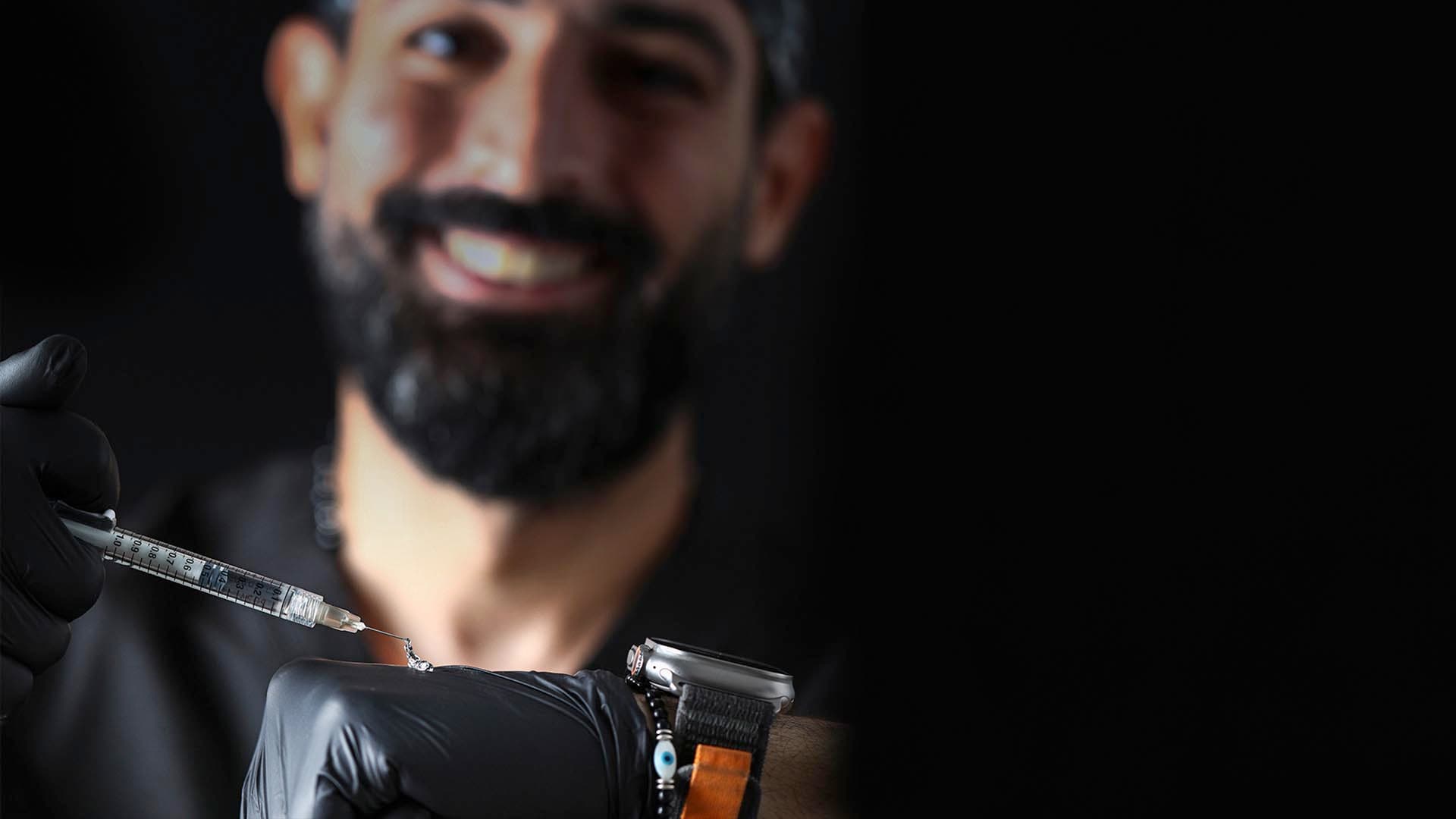
Written by the team at Dr Rami Haidar | Excellence Medical Boutique, Dubai
Dr Rami Haidar explains how anti-wrinkle injections and filler can elevate and reshape the brow non-surgically, which patients are most suited to this approach, and when surgery is the more appropriate recommendation.
The brow is one of the most structurally influential features of the upper face. Its position, arch and lateral contour affect the appearance of the eyes, the perceived width of the forehead and the overall balance of the face. A brow that has descended, become flat or lost its lateral support changes the entire character of the upper face, often creating an appearance of tiredness or heaviness that patients find difficult to articulate but immediately recognise.
There are both surgical and non-surgical approaches to brow lifting. This article focuses on the non-surgical options, what they can realistically achieve, and the patients for whom they are most appropriate.
Brow position is the result of a balance between the muscles that elevate the brow and those that depress it. The frontalis muscle is the primary brow elevator: its contraction raises the forehead skin and lifts the brow. The brow depressors include the corrugator supercilii, the procerus and the lateral fibres of the orbicularis oculi. When these muscles are active, they pull the brow down and inward.
With age, brow descent is driven by several factors: the natural elongation of the forehead skin as the underlying support structures change, a relative weakening of the frontalis, and increased activity of the depressors. The lateral brow, supported by a relatively thin ligamentous structure, typically descends earlier and more significantly than the medial brow.
Understanding this anatomy is what makes a non-surgical brow lift work. The approach is not about adding volume over the brow and hoping it floats upward. It is about modifying the muscular balance that controls brow position.
The most clinically reliable non-surgical brow elevation technique uses botulinum toxin to selectively relax the brow depressors while preserving or allowing the frontalis to continue its elevating function.
By placing small doses of anti-wrinkle product precisely into the corrugator, the lateral orbicularis oculi and, where appropriate, the procerus, the downward pull on the brow is reduced. The frontalis, no longer working against the same degree of depressor resistance, can maintain the brow at a higher resting position.
The lateral tail of the brow responds particularly well to this approach. Relaxing the lateral orbicularis oculi allows the tail of the brow to lift, which opens the outer corner of the eye and creates a more alert appearance. This is the most consistently effective component of the anti-wrinkle brow lift.
The medial brow is more complex to elevate non-surgically because the corrugator, when fully relaxed, can sometimes allow the medial brow to drop in certain individuals with strong frontalis anatomy. Precise dosing and careful assessment of each patient’s muscle behaviour before treatment is essential to avoid this.
The lateral brow and the temporal region above it lose volume with age. When this happens, the skin overlying the lateral brow loses its structural backing, contributing to the appearance of brow descent and hooding at the outer eye.
Carefully placed filler in the lateral brow and the superficial temporal fat compartment can restore this structural support, lifting and supporting the brow tail without changing its fundamental position. This is a complementary approach to anti-wrinkle injection rather than an alternative, and works best when the volume deficit is a contributing factor to the concern.
The temple is one of the areas most frequently undertreated in facial aesthetics. Restoring volume here has a visible impact on the lateral brow, the outer eye and the overall contour of the upper face that many patients find significant.
A non-surgical brow lift produces subtle to moderate improvement in brow position and shape. It cannot replicate the lift achievable through a surgical brow lift, which addresses the brow at a structural level by repositioning and securing it. For patients with significant brow descent, excess skin in the brow or upper eyelid, or a deep-set upper face, the non-surgical result will be limited.
It also cannot produce a permanent result. Anti-wrinkle injections last three to five months. Filler in the lateral brow and temple lasts twelve to eighteen months. An ongoing maintenance programme is required to sustain the benefit.
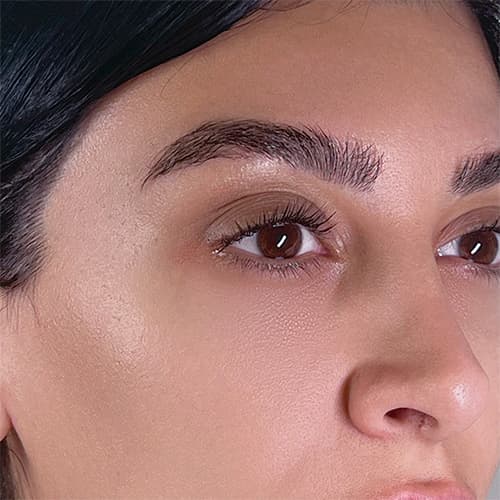
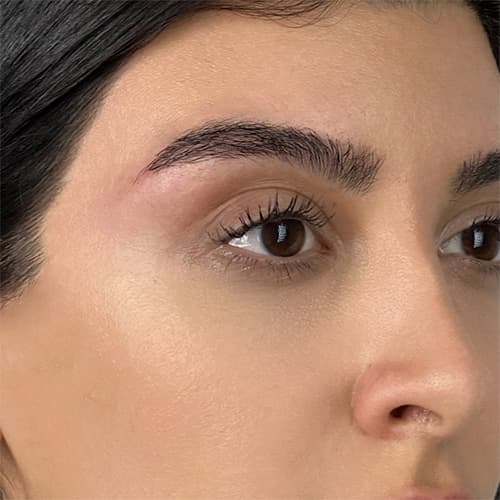
The best candidates are patients with mild to moderate brow descent, good underlying skin quality and no significant excess skin at the upper eyelid. Patients in their thirties and forties who have noticed the brow beginning to lose its position, who want improvement without the commitment of surgery, and who are willing to maintain the result with periodic treatment are typically well suited.
Patients with significant brow ptosis, heavy upper eyelid skin, or those who want a substantial and permanent elevation are better served by a surgical consultation. This is not a failure of the non-surgical approach: it is honest candidacy assessment, and it serves the patient better than overpromising the injectable result.
Dr Rami’s approach to the upper face begins with an assessment of the brow anatomy and the muscular dynamics that are contributing to the concern. His understanding of the brow depressors and the balance between elevation and depression is directly relevant to both the technique selection and the dosing decisions in this treatment.
He will also be direct about the situations where a surgical consultation is the more appropriate recommendation. The goal is always the right outcome for the individual patient, which requires an honest assessment of what non-surgical treatment can deliver.
A consultation with Dr Rami is the appropriate starting point for anyone considering brow lifting options in Dubai.
The degree of elevation varies by individual anatomy and the starting brow position. Most patients achieve a subtle to moderate lift, typically two to four millimetres at the lateral brow tail. The improvement in the appearance of the upper face can be more significant than this measurement suggests due to the change in brow shape and the opening of the outer eye.
Anti-wrinkle injection effects typically last three to five months. Filler placed in the lateral brow and temple lasts twelve to eighteen months. A combined approach requires maintenance at different intervals for each component.
Anti-wrinkle injections involve very fine needles and most patients describe them as a mild sting. Filler in the brow and temple is treated with numbing cream and, where needed, local anaesthesia. Discomfort is minimal for most patients.
A surgical brow lift repositions the brow structurally through incisions in the hairline or above the brow, producing a lasting lift. A non-surgical brow lift modifies the muscular balance controlling brow position and restores volume to provide structural support, producing a more modest and temporary result. The appropriate approach depends on the degree of descent and the patient’s goals.
Patients with significant brow descent, excess upper eyelid skin that would benefit from blepharoplasty, or those seeking a substantial permanent change are not the most appropriate candidates for a non-surgical approach. A consultation will identify which pathway is most appropriate.
Yes. Non-surgical brow lifting is frequently combined with other upper face treatments including skin booster treatment, periorbital polynucleotides and full-face anti-wrinkle treatment as part of a comprehensive plan. Treatment sequence and timing depend on the individual plan.
Located in the heart of Jumeirah, Dubai, Excellence Medical Boutique is more than a clinic, it’s a destination. A sanctuary where innovation, expertise and care come together to enhance your natural beauty and confidence. Excellence Medical Boutique is conveniently located on 197 Jumeira St, Jumeirah, Jumeirah 1, Dubai. This makes it easy for patients travelling from across Dubai to visit for consultation and treatment.