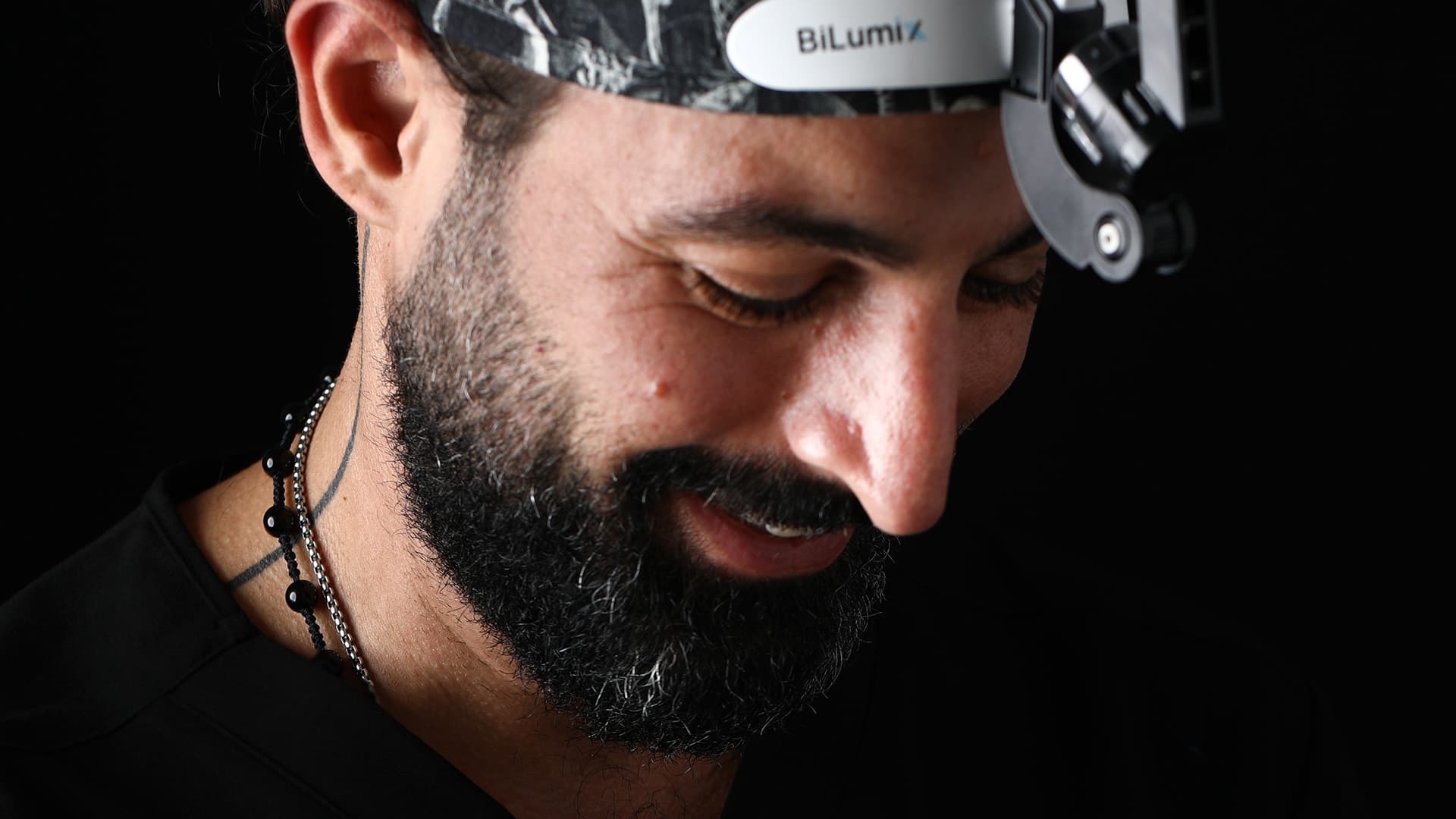
Written by Dr Rami Haidar | 22nd August 2026 | Excellence Medical Boutique, Dubai
Skin quality treatments have become an increasingly significant part of aesthetic medicine. Where earlier approaches focused predominantly on volume and contour, there is now a greater understanding that the texture, hydration, and biological behaviour of the skin itself are central to how the face looks and ages. Skin boosters occupy a specific and important place in this landscape, and they are frequently misunderstood or conflated with other injectable treatments.
This article explains what skin boosters are, how they differ from dermal fillers and surface hydration products, who benefits most from them, and why they are particularly relevant for patients in Dubai.
Skin boosters are injectable products designed to improve skin quality from within rather than to add structural volume or contour. The most established formulations are based on hyaluronic acid, a molecule naturally present in the skin and connective tissue that is responsible for maintaining water content and supporting the extracellular matrix.
Unlike structural dermal fillers, which use cross-linked hyaluronic acid to create volume and lift, skin booster formulations use lightly cross-linked or uncross-linked hyaluronic acid. This allows the product to integrate with the surrounding tissue and act as a hydration reservoir rather than occupying space. The result is an improvement in skin hydration, elasticity, and surface quality rather than a change in facial structure.
Skin boosters work by delivering hyaluronic acid into the dermis in a way that supplements the skin’s own depleted reserves. As the skin ages, its natural hyaluronic acid content decreases, contributing to a loss of firmness, plumpness, and resilience. Environmental factors, including UV exposure and dry climates, accelerate this depletion.
Once injected, the hyaluronic acid molecules attract and bind water within the dermis. This restores turgor to the skin, improves its capacity to retain moisture, and creates the conditions for better cellular behaviour. Over a course of treatments, improvements in skin texture, smoothness, and overall radiance become visible. Some formulations also contain additional actives such as amino acids, antioxidants, or polynucleotides that further support skin biology.
The injections are administered in a series of small depot injections across the treatment area, typically using a fine needle or cannula. Common treatment areas include the face, neck, decolletage, and hands.
The distinction between skin boosters and dermal fillers is one that patients often find confusing, as both are injectable hyaluronic acid products. The difference lies in formulation, placement depth, and intended outcome.
Dermal fillers use highly cross-linked hyaluronic acid, which gives the product cohesivity and resistance to deformation. This is what allows fillers to add volume to the cheeks, define the jawline, or augment the lips. They are placed at specific depths within the soft tissue to create a structural effect, and they remain as a defined mass until broken down.
Skin boosters, by contrast, are designed to integrate into the dermis and improve the quality of the tissue itself. They do not create volume or change facial structure. Their role is to restore hydration, improve elasticity, and enhance the overall condition of the skin. They can be used in patients who do not want or need structural augmentation, and they complement filler treatments by improving the quality of the skin through which fillers work.
Dubai’s climate poses specific challenges for skin health. The combination of intense UV exposure, air conditioning, low ambient humidity, and environmental pollutants creates conditions that accelerate skin dehydration and premature ageing. Patients in Dubai often present with skin that has lost moisture and resilience beyond what would be expected for their age, even when other aspects of their health and skincare are well managed.
Skin boosters are well suited to this context. By restoring hydration at the dermal level, they address one of the root causes of the skin quality changes that Dubai’s environment contributes to. Dr Rami Haidar considers the environmental context of each patient’s skin when planning treatment, and skin boosters frequently form part of a broader treatment programme for patients seeking to improve and maintain skin quality in this climate.
Skin boosters suit a wide range of patients. They are appropriate for younger patients looking to maintain skin quality and hydration before significant changes occur, as well as for older patients seeking to improve skin texture and resilience alongside other aesthetic treatments.
Patients who present with dull, dehydrated, or crepey skin texture, those with early loss of elasticity, and those whose skin has been affected by sun exposure are all likely to benefit. Skin boosters can also be used in areas that are not amenable to other treatments, such as the neck and decolletage.
At Excellence Medical Boutique in Jumeirah, Dubai, skin quality is treated as a clinical concern rather than a cosmetic add-on. Dr Rami Haidar’s approach to skin booster treatment begins with an assessment of the skin’s current condition, the patient’s lifestyle and environmental exposures, and the broader treatment context.
A consultation with Dr Rami is the appropriate starting point for patients in Dubai who want to understand whether skin boosters are the right treatment for their skin and how they fit into a broader plan for skin quality and long-term maintenance.
Skin boosters are injectable hyaluronic acid treatments designed to improve skin hydration, elasticity, and overall quality from within the dermis. Unlike dermal fillers, they do not add structural volume. They work by replenishing the skin’s moisture-binding capacity and supporting the conditions for better cellular behaviour.
Dermal fillers use highly cross-linked hyaluronic acid to create structural volume and definition. Skin boosters use lightly cross-linked or uncross-linked formulations that integrate into the dermis to improve skin quality and hydration. They serve different purposes and are not interchangeable.
A typical initial course consists of two to three sessions spaced three to four weeks apart. After the initial course, maintenance sessions every three to six months are recommended to sustain results, depending on the formulation used and the individual patient’s skin.
Skin boosters are appropriate for most skin types and ages. They are particularly beneficial for patients with dehydrated, dull, or early-ageing skin. Suitability is confirmed at consultation, where skin condition and treatment goals are assessed.
Skin booster treatment involves minimal downtime. Small injection marks and mild redness are common immediately following treatment but typically resolve within a few hours to a day. Occasional small bruises may occur but are generally short-lived.
Results from a full initial course typically last three to six months, depending on the product used and the individual patient. Ongoing maintenance treatments extend and sustain the improvement over time.
Yes. Dubai’s combination of UV exposure, air conditioning, and low humidity accelerates dermal dehydration. Skin boosters address this at the tissue level, making them particularly well suited to patients managing their skin health in this environment.
Located in the heart of Jumeirah, Dubai, Excellence Medical Boutique is more than a clinic, it’s a destination. A sanctuary where innovation, expertise and care come together to enhance your natural beauty and confidence. Excellence Medical Boutique is conveniently located on 197 Jumeira St, Jumeirah, Jumeirah 1, Dubai. This makes it easy for patients travelling from across Dubai to visit for consultation and treatment.