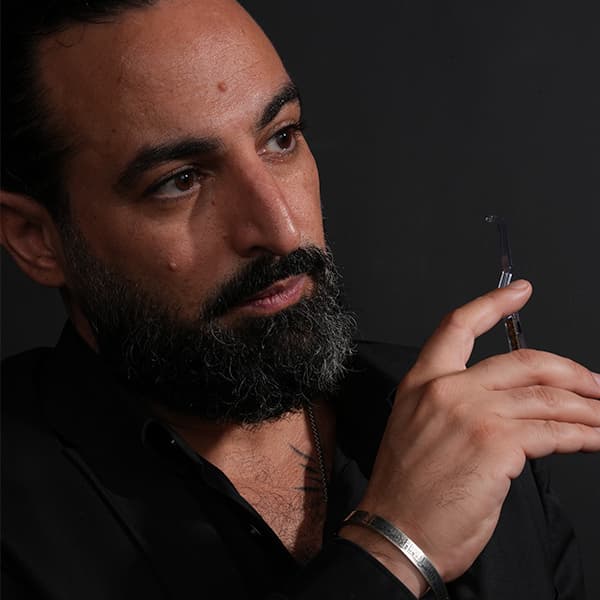
Patients sometimes come into consultation pointing out that one eyebrow sits slightly higher than the other, or that one side of their jaw looks a little different from the other, asking whether this should be corrected. It is a common concern, and an understandable one. The truth is that almost no face is perfectly symmetrical, and trying to force one would not actually make it look better.
This is a point Dr Rami Haidar returns to often with patients at Excellence Medical Boutique in Jumeirah, Dubai. Understanding the difference between symmetry and harmony, and knowing when asymmetry is simply a normal part of someone’s identity versus when it reflects an underlying structural cause, shapes how Dr Rami approaches nearly every consultation. It also explains why treatment planning starts with understanding the cause of a concern, rather than treating every visible difference as something to be corrected.
Dr Rami Haidar | 13th July 2026 | Excellence Medical Boutique, Dubai
In practice, almost no one has a perfectly symmetrical face. Small differences between the left and right side, in the eyes, the eyebrows, the jawline, or the smile, are part of what makes each face distinctive. This is true even for people widely considered conventionally attractive, including well-known public figures, whose faces show the same natural asymmetry as anyone else’s when examined closely
This is why chasing perfect symmetry as a treatment goal is often the wrong instinct. The small variations between the two sides of a face are not flaws to be corrected. They are part of what makes a face recognizably someone’s own.
A simple way to see this is to take a photo of a face and create two mirrored versions, one built entirely from the left side and one entirely from the right side. The results are often described as looking strange or artificial, even when the original face is considered very attractive. Perfect symmetry, when actually achieved, tends to look uncanny rather than beautiful.
This is a useful demonstration precisely because it shows that natural asymmetry is not something the eye reads as a problem. What the eye actually responds to is balance and harmony across the whole face, not mathematically identical halves.

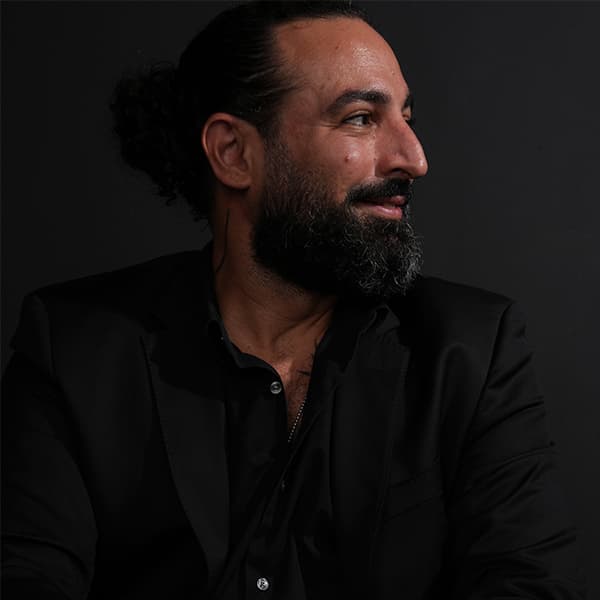
Facial asymmetry can come from a range of sources. In many people, it is simply a natural variation with no underlying cause, similar to how few people have perfectly even shoulders or perfectly matched hands. In other cases, asymmetry can be related to habits, such as chewing predominantly on one side, or to skeletal and structural differences in the underlying bone.
This distinction matters because it changes what, if anything, should be done about it. Natural, minor asymmetry generally does not need correction. Asymmetry that comes from a genuine structural or skeletal cause is a different situation, and may be a conversation for a different kind of assessment altogether. Patients are sometimes surprised to learn that a concern they have always had about their profile or bite is connected to the same underlying asymmetry they notice in the mirror.
Most everyday facial asymmetry does not need treatment at all, since it falls within the normal range of human variation. In cases where asymmetry is significant and related to the underlying jaw or facial skeleton, this becomes a structural question rather than a purely aesthetic one, and may fall under Dr Rami’s surgical scope as an Oral and Maxillofacial Surgeon, potentially including procedures such as orthognathic surgery in appropriate cases.
This is an important distinction Dr Rami makes clear in consultation. Aesthetic treatments such as filler or botulinum toxin can sometimes help soften the appearance of minor asymmetry, but they are not a substitute for addressing a genuine structural cause when one is present.

Facial harmony refers to how well the different features and proportions of a face work together as a whole, rather than whether the two sides match exactly. A face can have noticeable natural asymmetry and still read as balanced, attractive, and harmonious. This is a subtly different goal from symmetry, and it is the one Dr Rami works toward with patients rather than chasing an artificial, mirror-image ideal.
Treating the face for harmony means looking at proportion, balance, and how features relate to one another, rather than measuring one side against the other and trying to make them identical.

Patients who feel that a specific asymmetry bothers them, or who are unsure whether what they are noticing is normal variation or something worth addressing, may benefit from an honest assessment rather than guessing on their own. Suitability for any treatment, and whether treatment is even the right answer, depends on individual anatomy and the underlying cause of the asymmetry, which can only be properly evaluated in person.
Patients seeking a perfectly symmetrical result should understand that this is not typically a realistic or even a desirable goal, since it does not reflect how real, natural faces actually look.
If you have noticed asymmetry in your face and are unsure whether it needs attention, a consultation is the appropriate next step rather than assuming either that nothing can be done or that everything should be corrected. Dr Rami sees patients at Excellence Medical Boutique in Jumeirah, Dubai, where any assessment begins with understanding the cause of the asymmetry before any treatment is discussed.
Yes. Almost no one has a perfectly symmetrical face, and small differences between the left and right side are a normal part of human variation. These differences are part of what makes a face recognizably someone’s own.
When a face is mirrored to create two identical halves, the result often looks artificial rather than more attractive. This is because the eye responds to overall balance and harmony, not to mathematically identical sides.
Facial asymmetry can be a natural variation with no specific cause, or it can be related to habits such as chewing predominantly on one side, or to structural differences in the underlying jaw or facial skeleton. The cause determines whether any treatment is appropriate.
No. Most everyday facial asymmetry falls within normal variation and does not need correction. Treatment is more relevant when asymmetry is significant and related to an underlying structural or skeletal cause.
Symmetry refers to whether the two sides of the face match exactly, while facial harmony refers to how well all the features and proportions work together as a whole. A face can be naturally asymmetrical and still be balanced and harmonious.
Filler and botulinum toxin can sometimes help soften the appearance of minor asymmetry, but they do not address a genuine structural or skeletal cause. When asymmetry is structural, a different kind of assessment may be needed.
When asymmetry is significant and involves the underlying jaw or facial skeleton, it may fall under the surgical scope of an Oral and Maxillofacial Surgeon, potentially including procedures such as orthognathic surgery in appropriate cases. This is assessed individually rather than assumed.
Dr Rami Haidar sees patients at Excellence Medical Boutique in Jumeirah, Dubai. Any assessment begins with understanding the cause of the asymmetry before discussing whether treatment is appropriate.
Located in the heart of Jumeirah, Dubai, Excellence Medical Boutique is more than a clinic, it’s a destination. A sanctuary where innovation, expertise and care come together to enhance your natural beauty and confidence. Excellence Medical Boutique is conveniently located on 197 Jumeira St, Jumeirah, Jumeirah 1, Dubai. This makes it easy for patients travelling from across Dubai to visit for consultation and treatment.