A common question in consultation is why the brows start to look heavy or tired, even in patients who feel well rested and are not otherwise bothered by lines or wrinkles. Many patients ask whether filler or Botox is the answer, expecting to choose one or the other. The truth is that a brow rarely lifts with a single treatment. It responds to two different things working together, one adding structural support and one releasing the muscle pulling it down.
This is the approach Dr Rami Haidar takes with patients at Excellence Medical Boutique in Jumeirah, Dubai, when a lifted, more open eye area is the goal. Understanding why the brow drops in the first place, and why two treatments in combination tend to outperform either one alone, helps explain why Dr Rami plans this as a small structured sequence rather than a single injection.
Dr Rami Haidar | 9th Febuary 2026 | Excellence Medical Boutique, Dubai
The eyebrow’s position depends on more than the skin around it. The temple, just beside the outer edge of the brow, naturally loses volume over time. As the temple hollows, it removes some of the support that helps hold the outer brow up, and the brow can begin to sit lower and look heavier. At the same time, the muscles that pull the brow downward can remain relatively active, meaning there is less lift working against them than there once was.
This combination, reduced structural support from the temple and an unopposed downward pull from the muscle, is why a heavy brow is rarely caused by one single factor. It also explains why treating only one side of the equation often produces a partial result.
Placing filler in the temple restores some of the volume that has been lost in that area. Because the temple sits directly beside the outer brow, adding support there can help lift the brow’s outer edge and soften the hollow, heavier look that develops with volume loss. This is a structural change, working from the side of the face inward, rather than acting directly on the brow itself.
In Dr Rami’s approach, temple filler is often placed first, since it provides a visible portion of the lift right away by restoring support that has been physically lost.
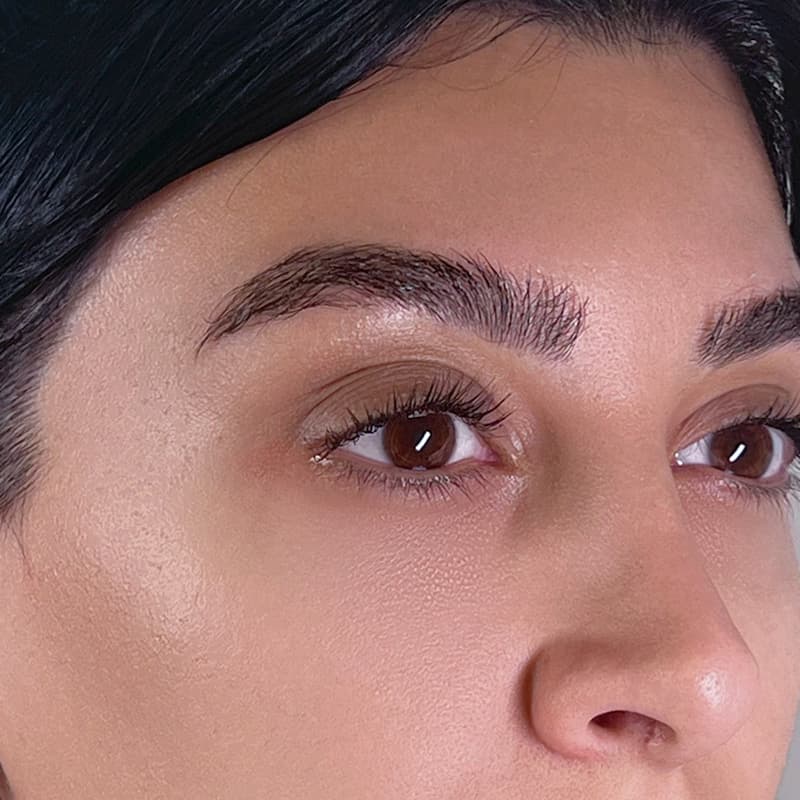
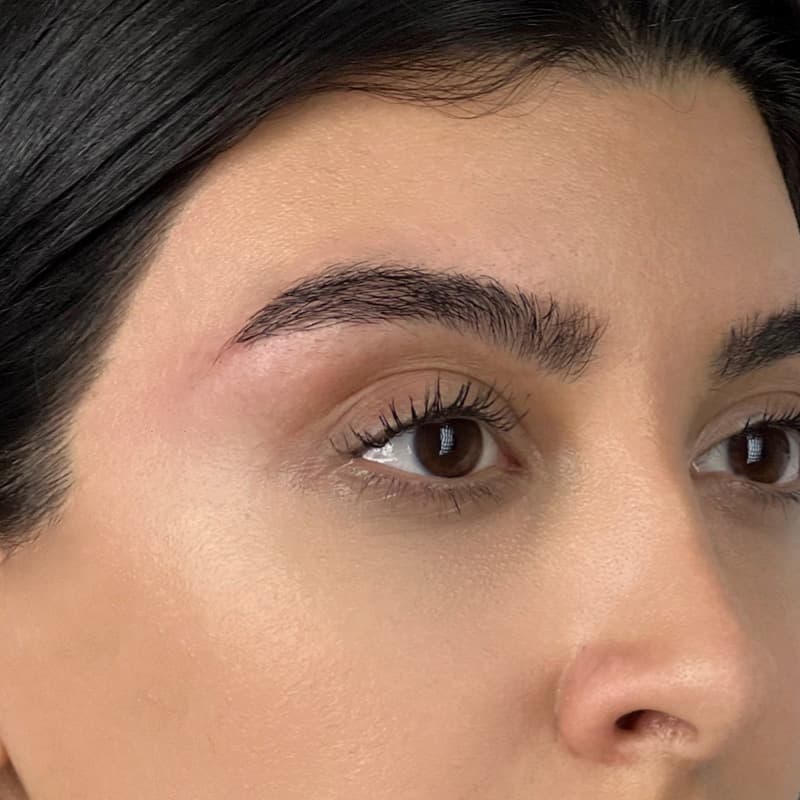
Botulinum toxin works differently. Rather than adding volume, it relaxes the muscles that pull the brow downward. When those depressor muscles are less active, the muscles that lift the brow face less resistance, allowing the brow to sit slightly higher. This is why botulinum toxin is often described as the finishing step in a brow lift, refining the position after structural support has already been restored.
Because botulinum toxin takes time to take full effect, this part of the result develops gradually over the days and weeks following treatment, rather than appearing immediately.
Temple filler and botulinum toxin address two separate causes of a dropped brow, so combining them tends to produce a more complete and natural-looking lift than either treatment used alone. Filler alone may improve the hollow in the temple without fully addressing the muscle pull, while botulinum toxin alone may relax the depressor muscles without correcting the lost structural support beside the brow.
In Dr Rami’s experience, a meaningful portion of the visible lift is often seen immediately after the temple filler is placed, with the remainder developing over the following one to two weeks as the botulinum toxin takes effect. Every patient’s anatomy is different, so the balance between the two varies and is planned individually rather than applied as a fixed formula.
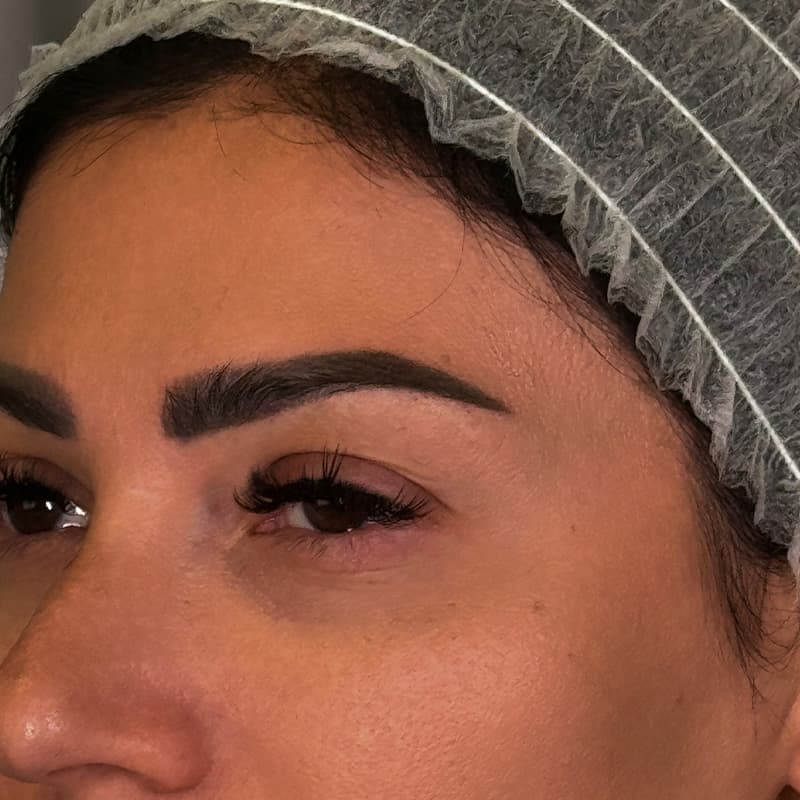
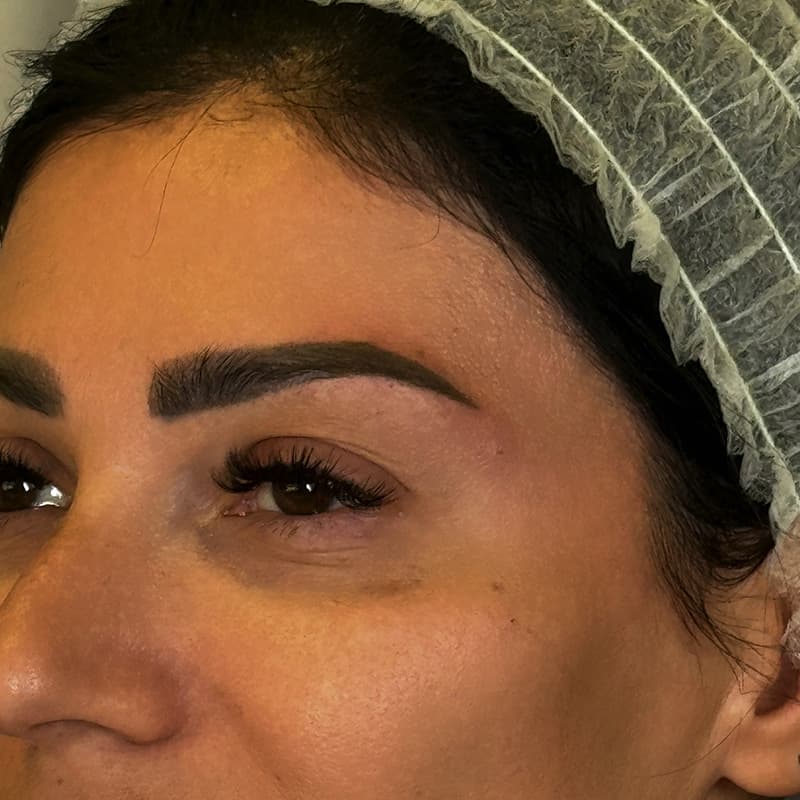
Results from a combination brow lift typically unfold in two stages. The temple filler provides an initial, visible change in support and position, while the botulinum toxin component continues to refine the brow’s height over the following weeks as the muscle relaxes. Final results are usually best assessed around two to three weeks after treatment, once both elements have had time to settle.
As with any injectable treatment, individual results vary depending on anatomy, skin quality, and the degree of volume loss or muscle activity present before treatment.
Patients who notice their brows sitting lower than they used to, or feeling that their eye area looks heavier or more tired despite feeling well, may be good candidates for this combination approach. This is a concern Dr Rami sees often in patients in their thirties and forties, though the timing varies considerably from one person to the next depending on skin quality, muscle activity, and lifestyle factors such as sun exposure. Suitability depends on individual anatomy, including how much of the concern is coming from temple volume loss versus muscle activity, and this can only be properly assessed during a consultation.
Patients seeking a dramatic, surgical-level change may need a different conversation, since this approach is designed to refresh and support the brow’s natural position rather than significantly alter its shape. Patients who have had brow treatments elsewhere without the result they expected may also benefit from a fresh assessment, since a previous treatment may have addressed only one of the two contributing factors.
If your brows have started to sit lower or your eye area looks heavier than you feel, a consultation is the appropriate next step. Dr Rami sees patients at Excellence Medical Boutique in Jumeirah, Dubai, where treatment planning begins with an assessment of both the temple and the surrounding muscles, so the resulting plan reflects your specific anatomy and goals rather than a one-size-fits-all approach.
Eyebrow position often changes because the temple loses volume over time, removing support from the outer brow, while the muscles that pull the brow downward remain active. Together, these two changes can make the brow sit lower and the eye area look heavier.
Botulinum toxin can help lift the brow by relaxing the muscles that pull it down, but it does not restore volume that has been lost in the temple. If temple hollowing is part of the concern, botulinum toxin alone may not fully resolve it.
Combining the two treatments addresses both common causes of a dropped brow, lost temple support and unopposed muscle pull, at the same time. This tends to produce a more complete and natural result than treating either cause alone.
Some lift is often visible soon after the temple filler is placed, since it restores volume immediately. The botulinum toxin component takes longer to develop, with the fuller result usually visible over the following one to two weeks.
No injectable treatment is permanent. Temple filler and botulinum toxin both have a temporary duration, and maintenance treatment is typically needed to sustain the result over time.
Suitability depends on individual anatomy, including how much of the brow concern is related to temple volume loss versus muscle activity, and this can only be assessed properly during a consultation. Patients seeking a more dramatic or surgical-level change may need a different conversation.
Dr Rami Haidar sees patients at Excellence Medical Boutique in Jumeirah, Dubai. Treatment planning begins with an assessment of the temple and surrounding muscles before any recommendations are made.
Located in the heart of Jumeirah, Dubai, Excellence Medical Boutique is more than a clinic, it’s a destination. A sanctuary where innovation, expertise and care come together to enhance your natural beauty and confidence. Excellence Medical Boutique is conveniently located on 197 Jumeira St, Jumeirah, Jumeirah 1, Dubai. This makes it easy for patients travelling from across Dubai to visit for consultation and treatment.