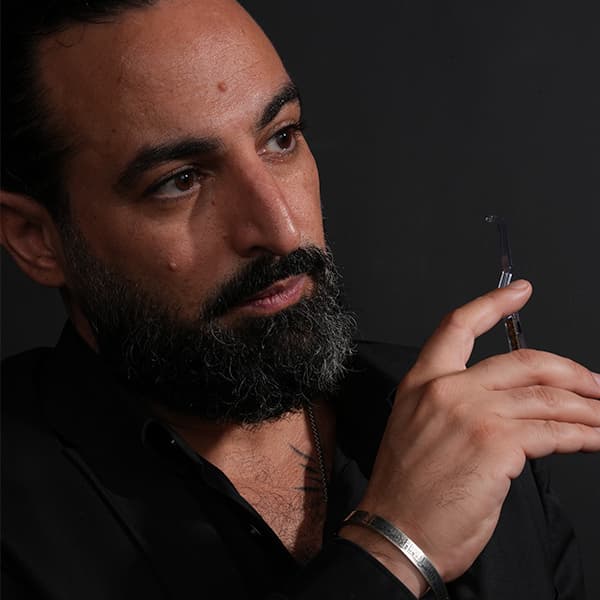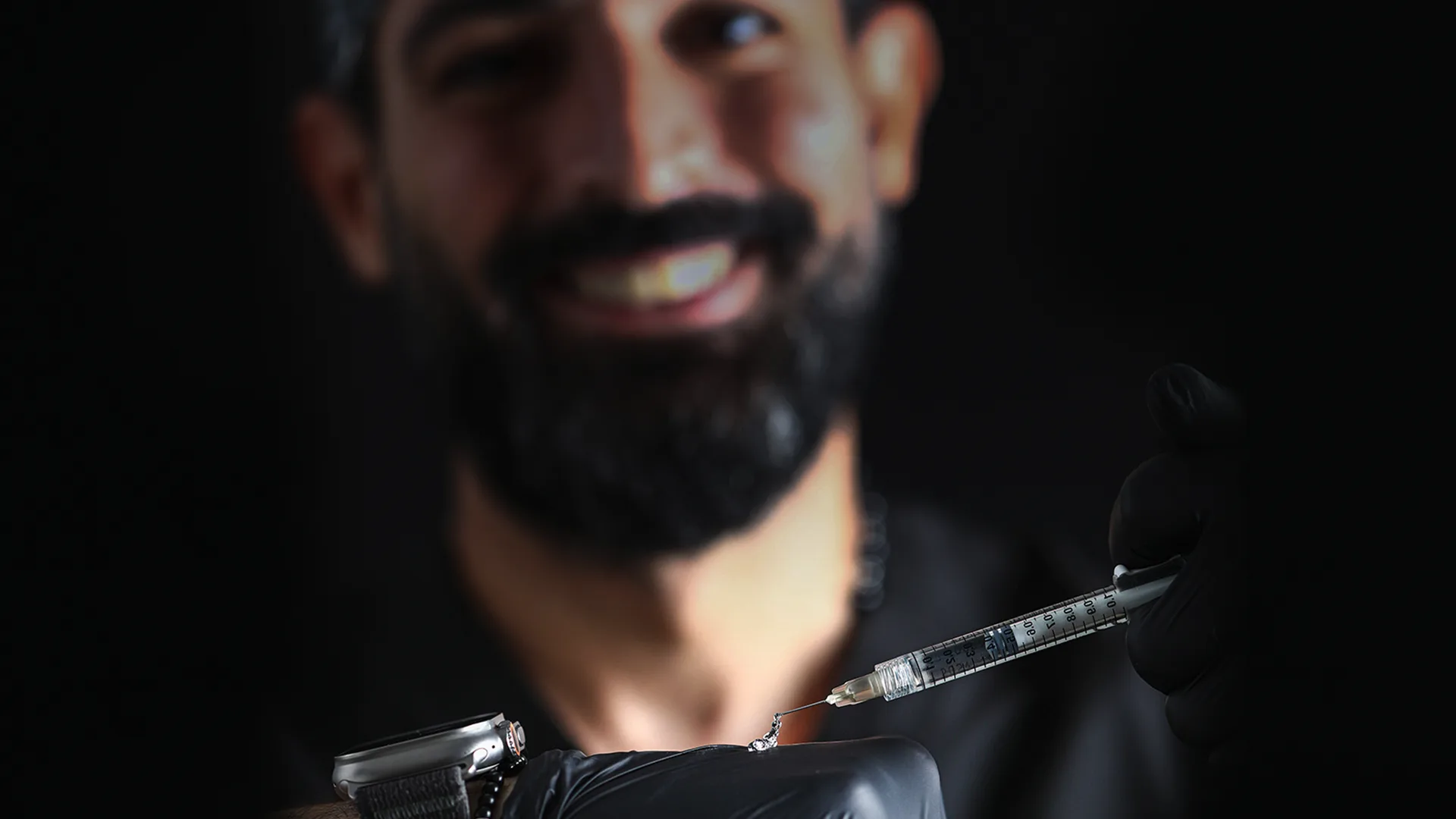
Glass skin is described far more often than it is explained. The phrase refers to a finish rather than a procedure, and what patients are describing when they ask for it is skin smooth enough and hydrated enough to reflect light evenly across its surface instead of scattering it. That finish depends on several different properties of the skin at once, which is why no single product delivers it.
This is the reasoning behind the combination Dr Rami Haidar uses at Excellence Medical Boutique in Jumeirah, Dubai. Four components are delivered in the same appointment, each addressing something the others leave untouched, and understanding what each contributes explains why part of the result appears within days while the rest continues developing for weeks.
Dr Rami Haidar | 11th May 2026 | Excellence Medical Boutique, Dubai
Skin reads as luminous when its surface is even and its hydration is good. Light striking a smooth, well hydrated surface reflects back in a consistent direction, which the eye interprets as glow. Light striking a dry or textured surface scatters in many directions instead, and the same skin then reads as flat or tired.
Pore appearance contributes to the same effect. Visible pores interrupt the surface at a small scale, breaking up the reflection even when hydration is good. Any treatment aiming at this particular finish therefore has to address texture, hydration and pore appearance together rather than treating one and hoping the others follow.
A glass skin treatment combines four elements: a DermaPen for delivery, polynucleotides for regeneration, hyaluronic acid for hydration, and a small amount of botulinum toxin placed superficially to reduce the appearance of pores. They are performed together in a single appointment.
Each covers a gap the others leave. Microneedling alone creates channels but delivers nothing through them. Polynucleotides alone regenerate but do not hydrate. Hyaluronic acid alone hydrates but does not change texture or pore appearance. The combination is the treatment rather than any one part of it
The DermaPen is the delivery method rather than the active ingredient. It creates controlled microchannels in the skin surface, which allows what follows to reach the depth at which it is useful instead of sitting on top of the skin where it would achieve very little.
The channels also prompt a healing response of their own, so the device contributes to the outcome as well as enabling it. This is why the same ingredients applied topically do not produce a comparable result.
Polynucleotides, often called salmon DNA, are the regenerative component. They do not fill and they add no volume. Instead they support the skin to repair itself, improving quality at the level of the cell, and this is the part of the treatment that continues working long after the appointment.
Hyaluronic acid is included to hydrate. It sounds like the least interesting component and is arguably the most important for this particular finish, since hydrated skin reflects light and dehydrated skin scatters it. In Dubai, where air conditioning and heat draw moisture out of skin continuously, it earns its place.
A small amount of botulinum toxin is placed superficially and in low doses, which is what is meant by baby Botox. The aim is not to stop movement, and the dose used here is considerably lower than that required to relax expression.
Used this way, the intention is to reduce the appearance of pores. Because visible pores interrupt the reflection of light at a small scale, refining them contributes directly to how even the surface looks.
Unusually for a treatment with a regenerative component, part of the result arrives quickly. Dr Rami puts it at two to three days before people begin noticing a difference, which is faster than most skin quality treatments manage.
However, the two timescales are worth separating. The early change is largely hydration and surface texture. The polynucleotide component continues working well beyond that, so the skin at several weeks is not the same as the skin at three days, and patients comparing this against skin boosters alone usually notice the difference in how long the improvement keeps building.

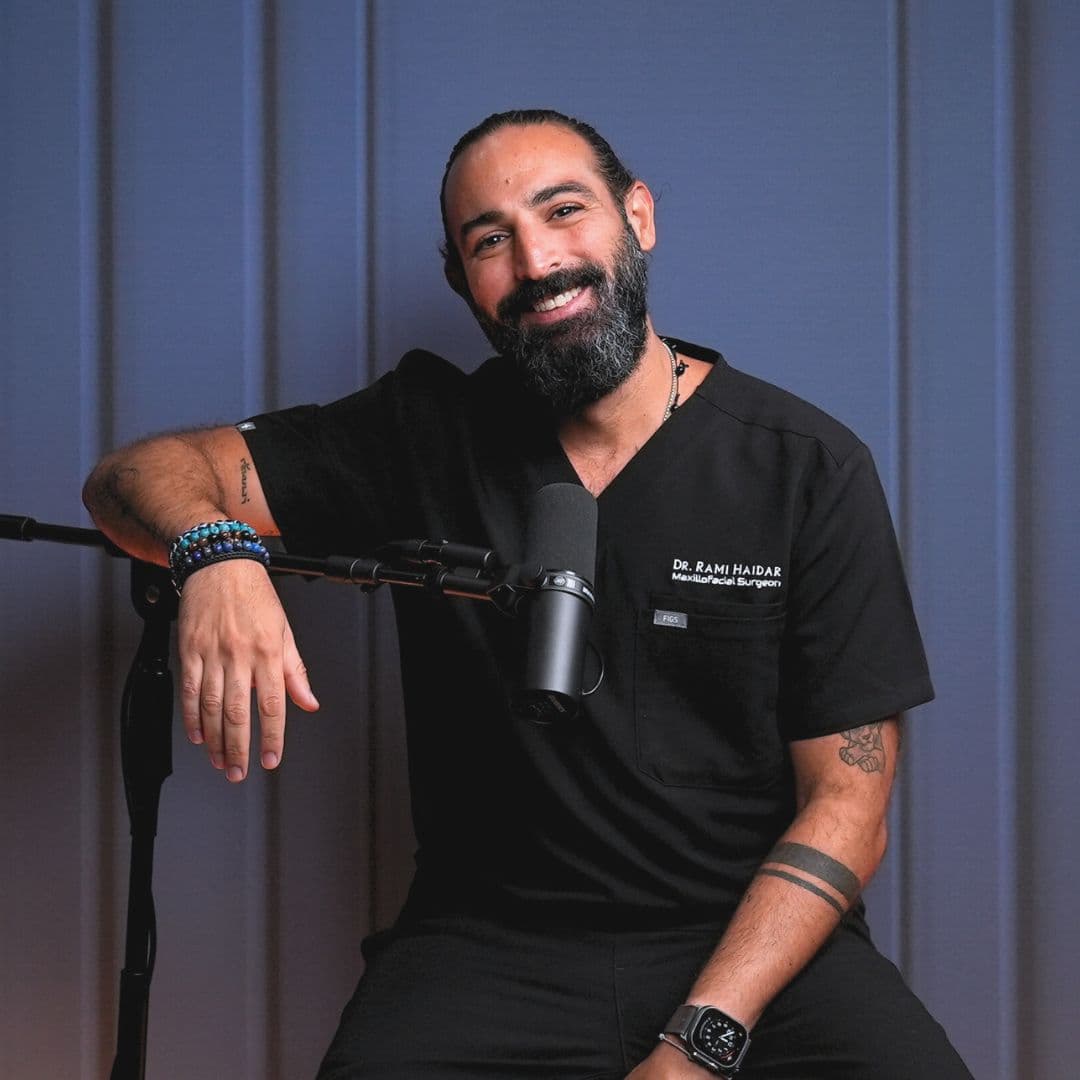
Patients whose concern is skin quality rather than facial structure tend to be well suited: dullness, uneven texture, visible pores, dehydration, and a surface that no longer catches the light. This is a concern Dr Rami sees frequently in patients whose skin has changed without their proportions having changed.
It is not a volume treatment and it does not address sagging or lost projection, which belong to a different conversation. Dr Rami Haidar assesses the skin before recommending a glass skin treatment, and the proportions of each component are adjusted rather than run as a fixed protocol, so two patients having the same named treatment may not receive identical proportions.

If your concern is dullness, texture or visible pores rather than volume, a consultation is the appropriate next step. Dr Rami sees patients at Excellence Medical Boutique in Jumeirah, Dubai, where planning begins with an assessment of skin quality rather than a standard protocol.
That assessment establishes which components your skin actually needs and in what proportion, which is what separates a combination treatment from a menu item.
Glass skin describes a finish where skin is smooth and hydrated enough to reflect light evenly. The treatment achieving it is a combination rather than a single product, using a DermaPen for delivery alongside polynucleotides, hyaluronic acid and a small amount of botulinum toxin.
Four components. A DermaPen creates microchannels for delivery, polynucleotides support repair and regeneration, hyaluronic acid provides hydration, and baby Botox reduces the appearance of pores. Each addresses a different property of the skin.
Baby Botox refers to small doses placed superficially rather than the doses used to relax expression. Used this way the aim is to reduce how prominent pores appear, which makes the surface look more even and improves how light reflects off it.
Dr Rami puts the first visible change at around two to three days. That early improvement is mostly hydration and surface texture. The polynucleotide component continues working over the following weeks, so the result keeps developing.
Not quite. A skin booster addresses hydration, while the glass skin combination adds regeneration through polynucleotides and pore refinement through baby Botox on top of that. Which suits you depends on what your skin is lacking.
Discomfort is generally modest. Topical numbing is commonly used for microneedling-based treatments and most patients describe the sensation as tolerable. Some redness immediately afterwards is normal and settles within a day or so.
The regenerative component usually works best as a short course rather than a one-off, and maintenance intervals vary between patients. Dubai’s climate is a genuine factor, since air conditioning and sun exposure dehydrate skin continuously.
No. This is a skin quality treatment rather than a structural one, addressing texture, hydration and pore appearance rather than lost volume or laxity. If sagging is the main concern, a different plan is needed.
Located in the heart of Jumeirah, Dubai, Excellence Medical Boutique is more than a clinic, it’s a destination. A sanctuary where innovation, expertise and care come together to enhance your natural beauty and confidence. Excellence Medical Boutique is conveniently located on 197 Jumeira St, Jumeirah, Jumeirah 1, Dubai. This makes it easy for patients travelling from across Dubai to visit for consultation and treatment.